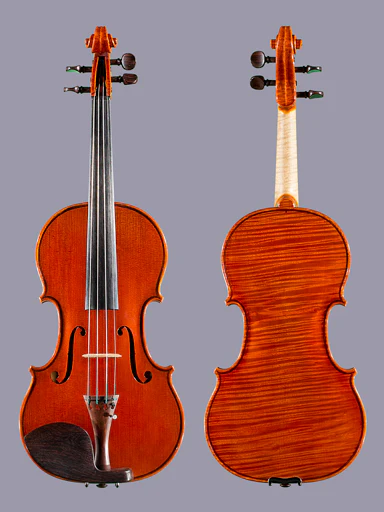
Alfred Lanini violin #159, 1934, San Jose, California | Metzler Violins
resonant, sweet, supple
About the Instrument
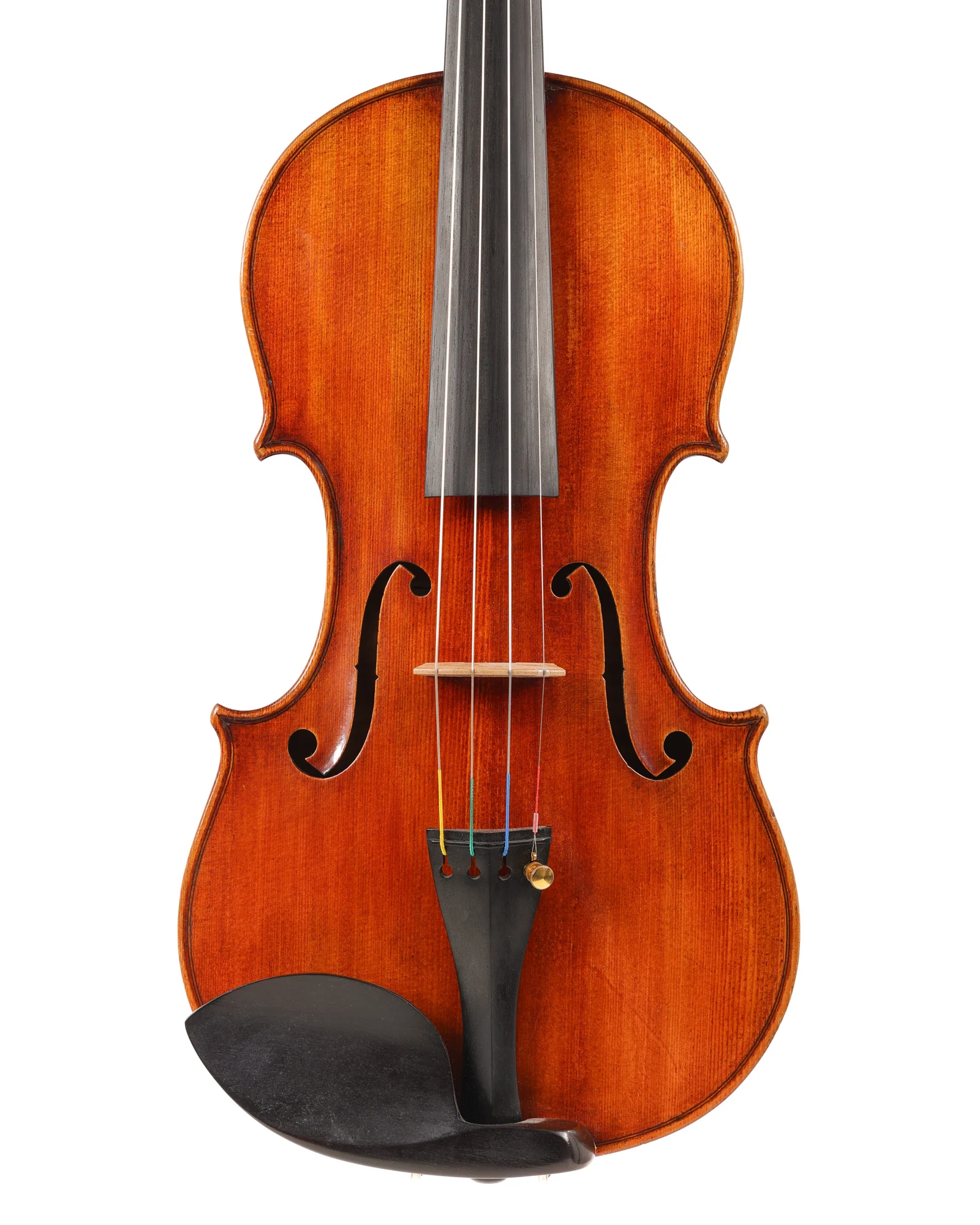
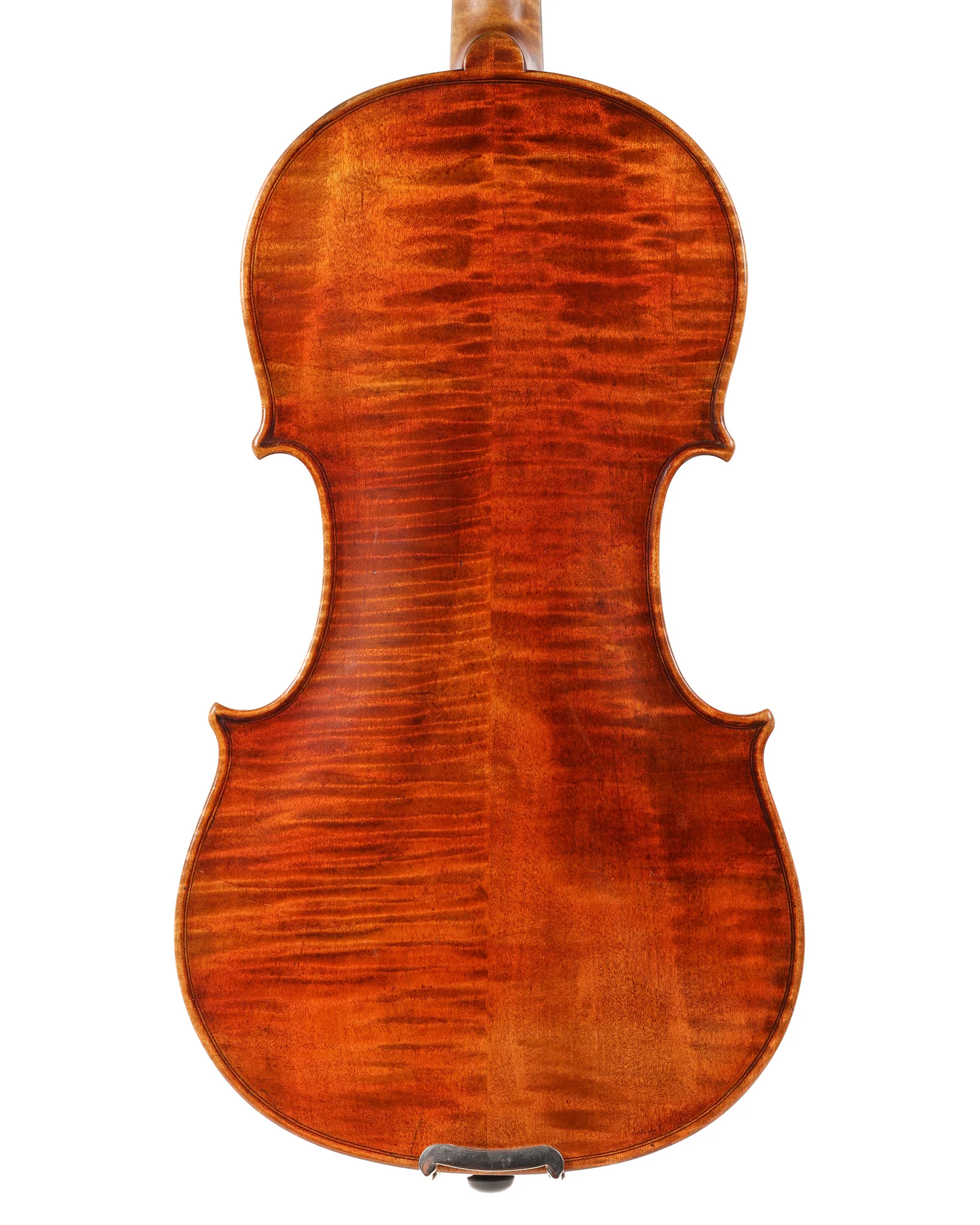
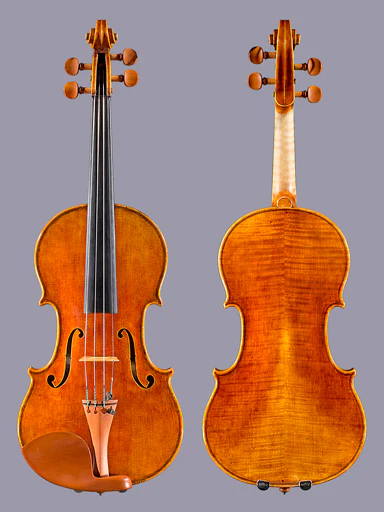
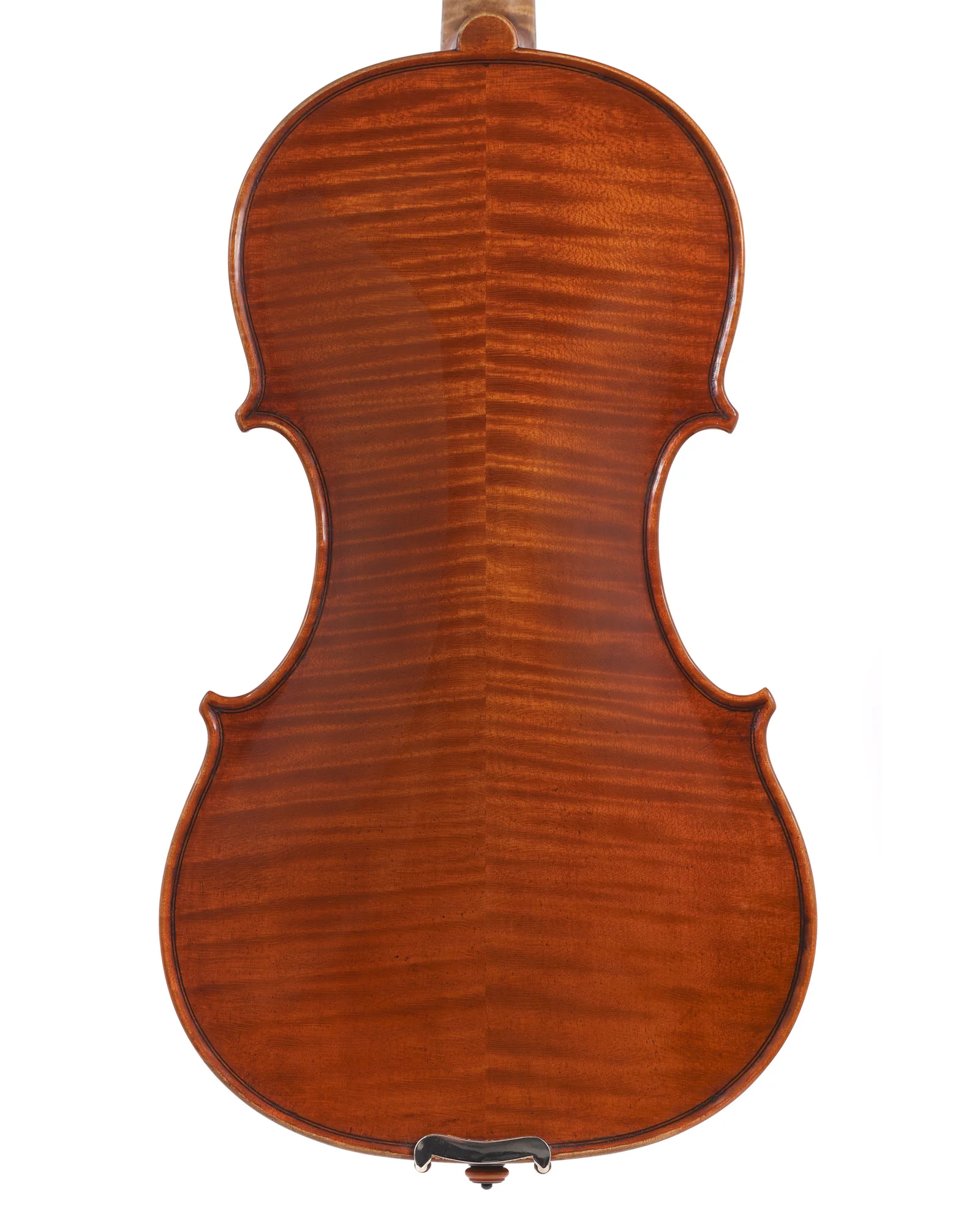
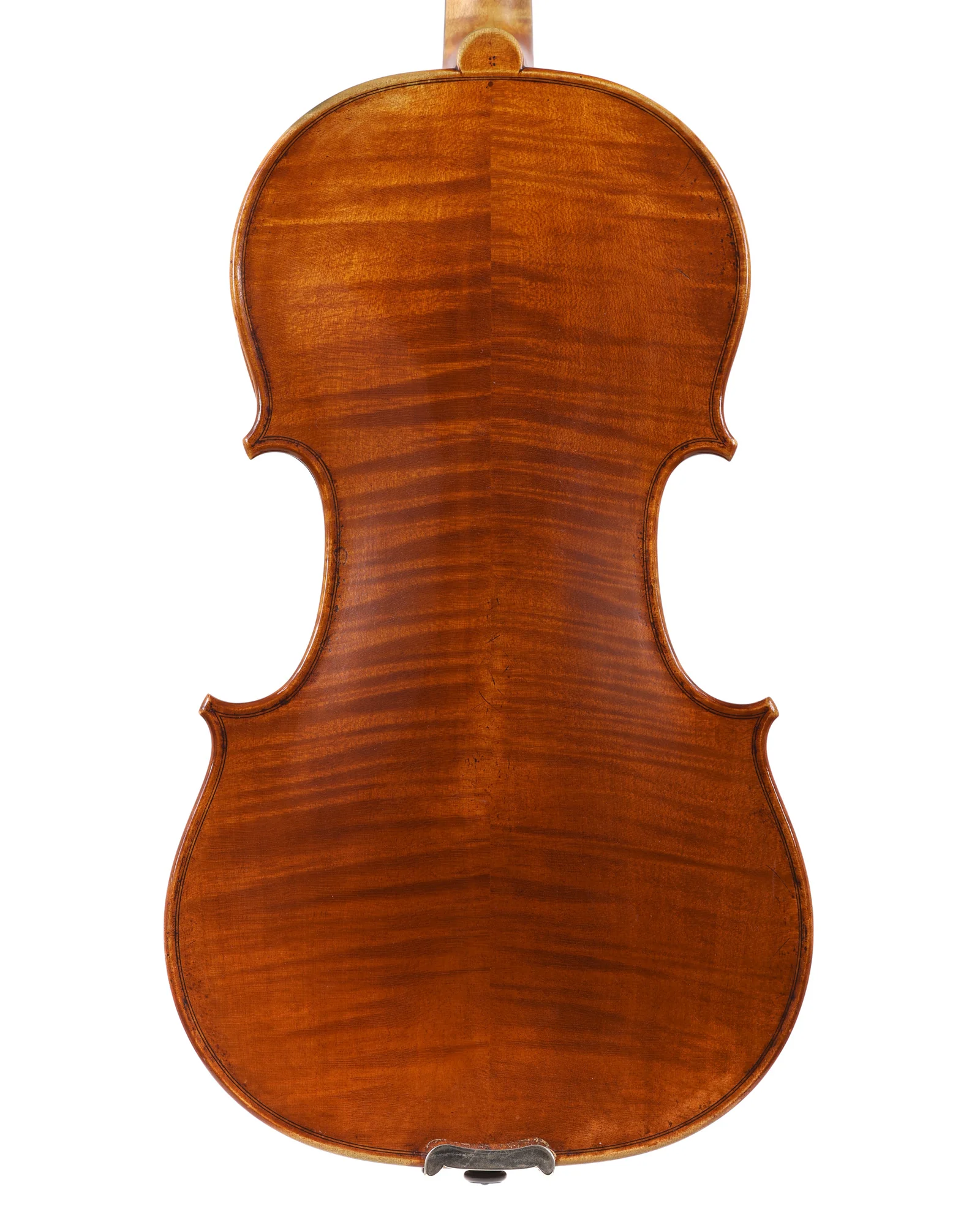
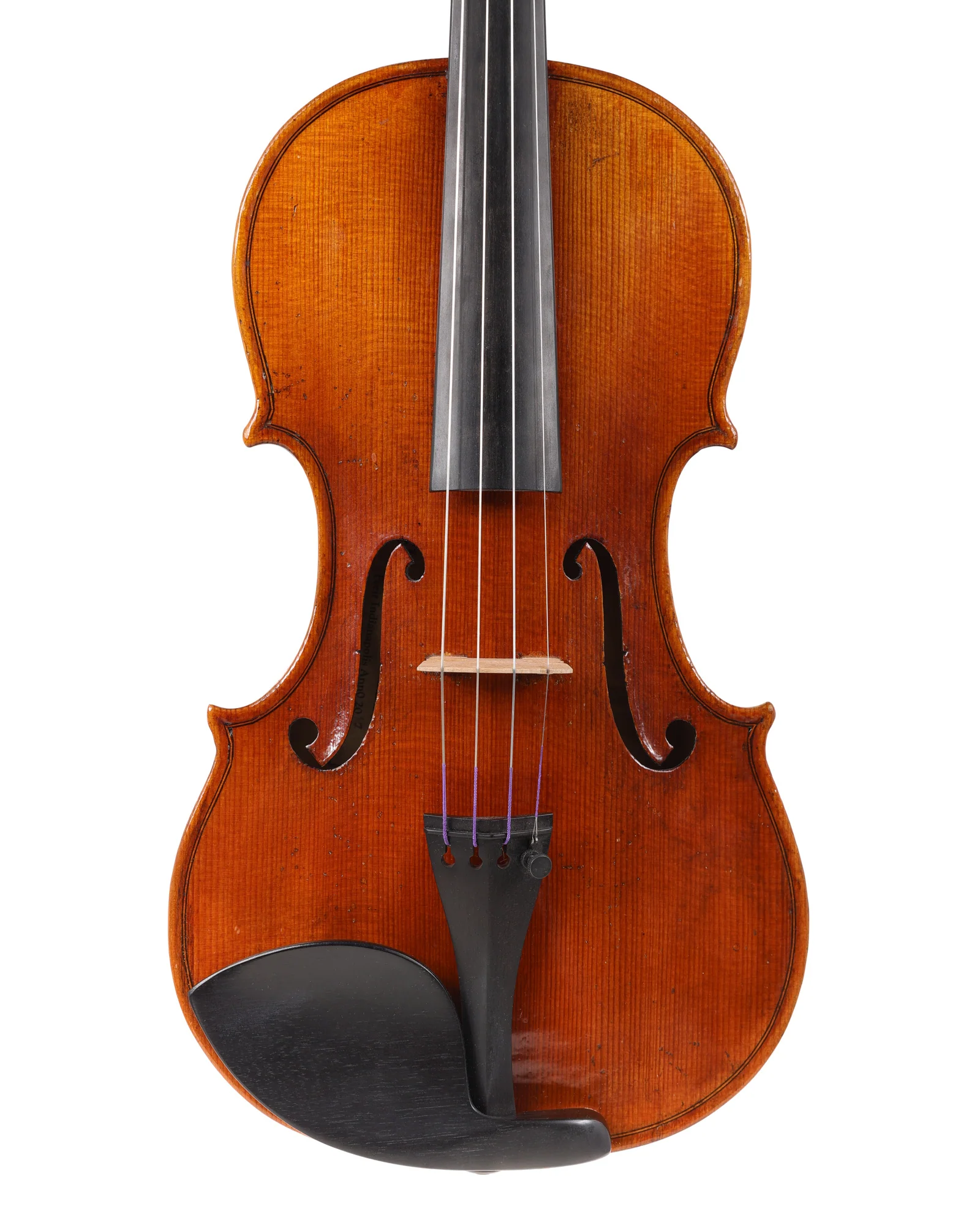
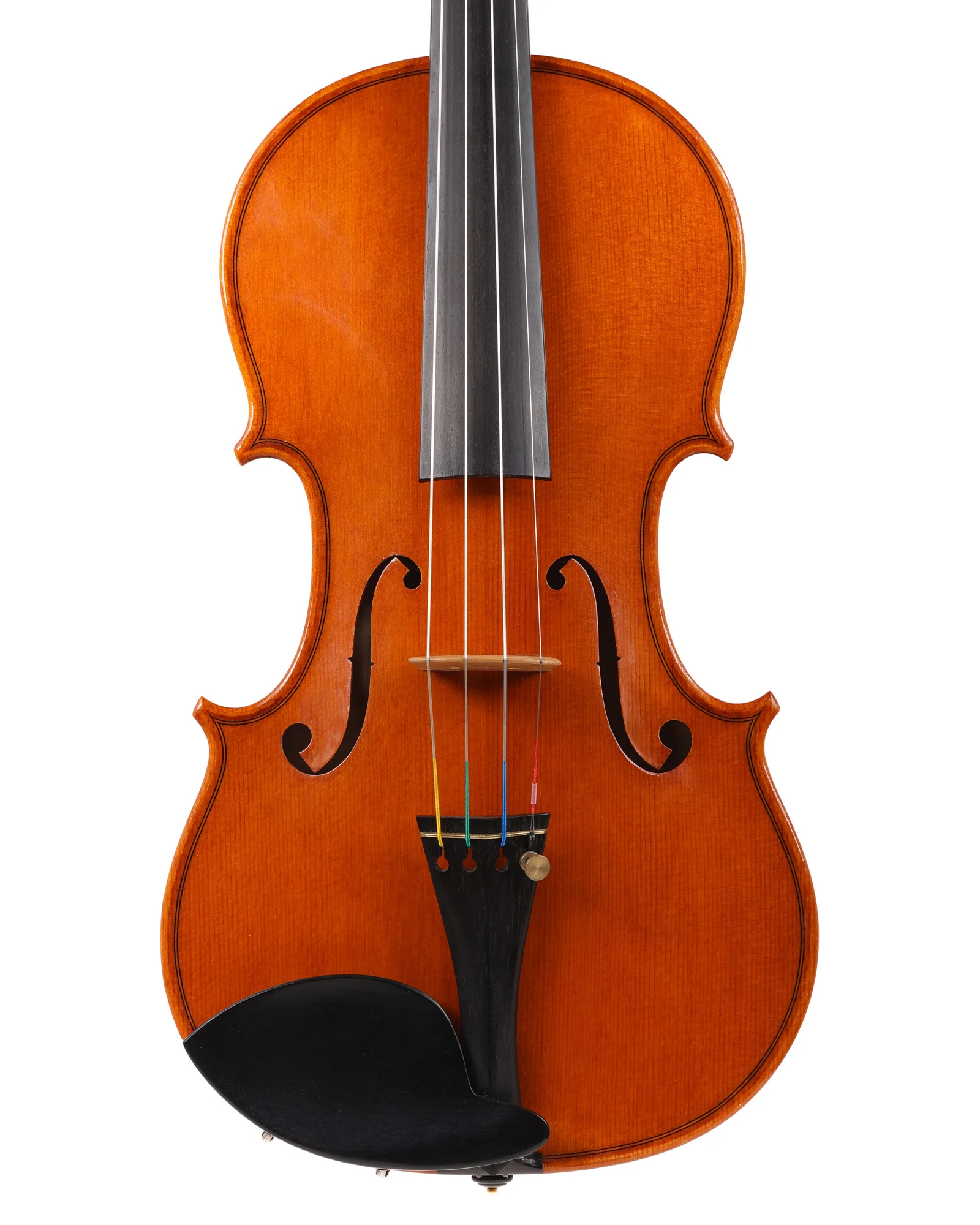
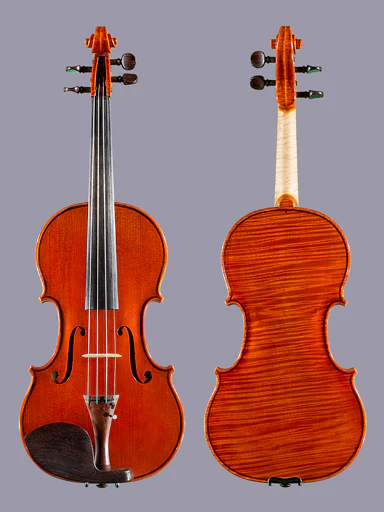
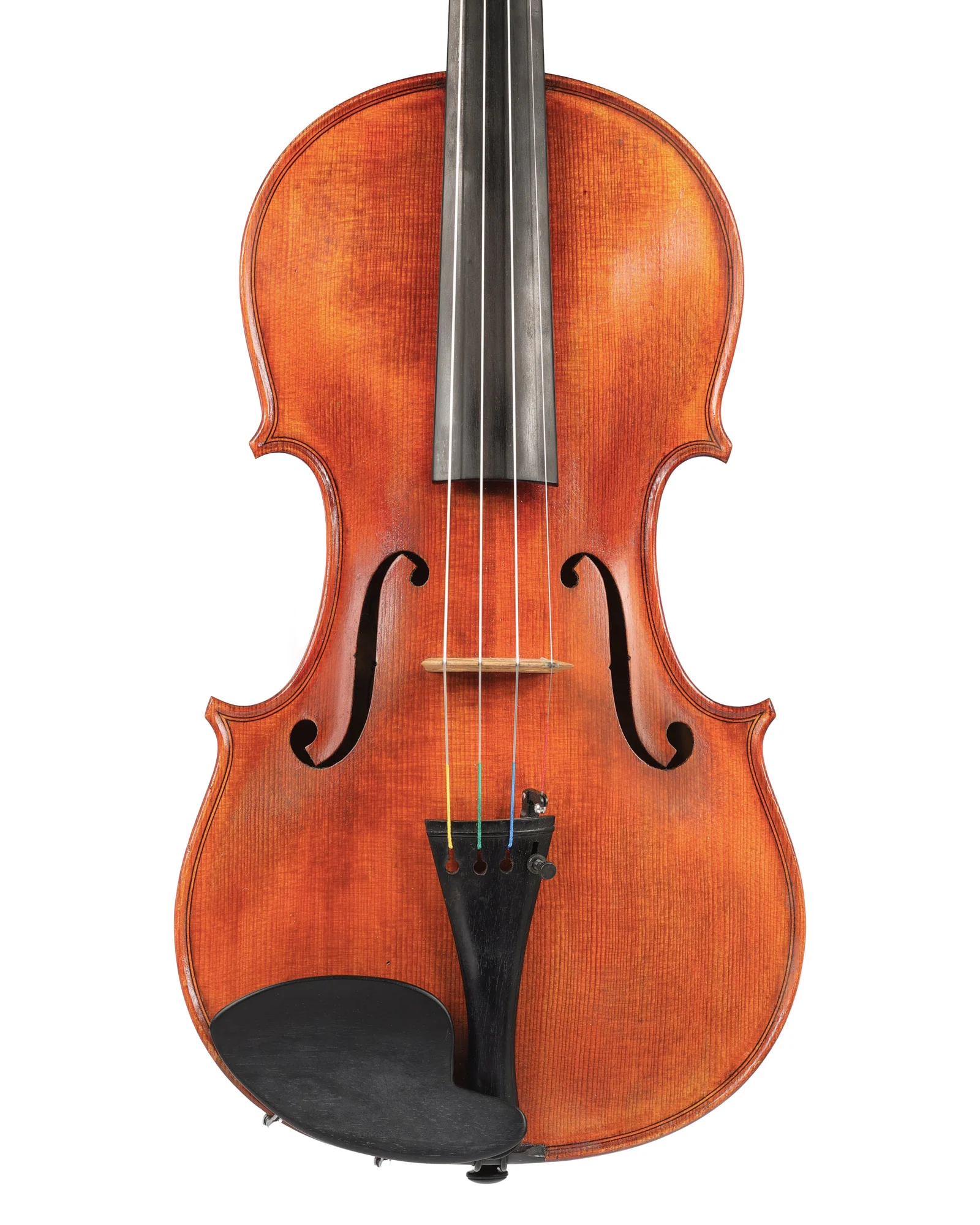
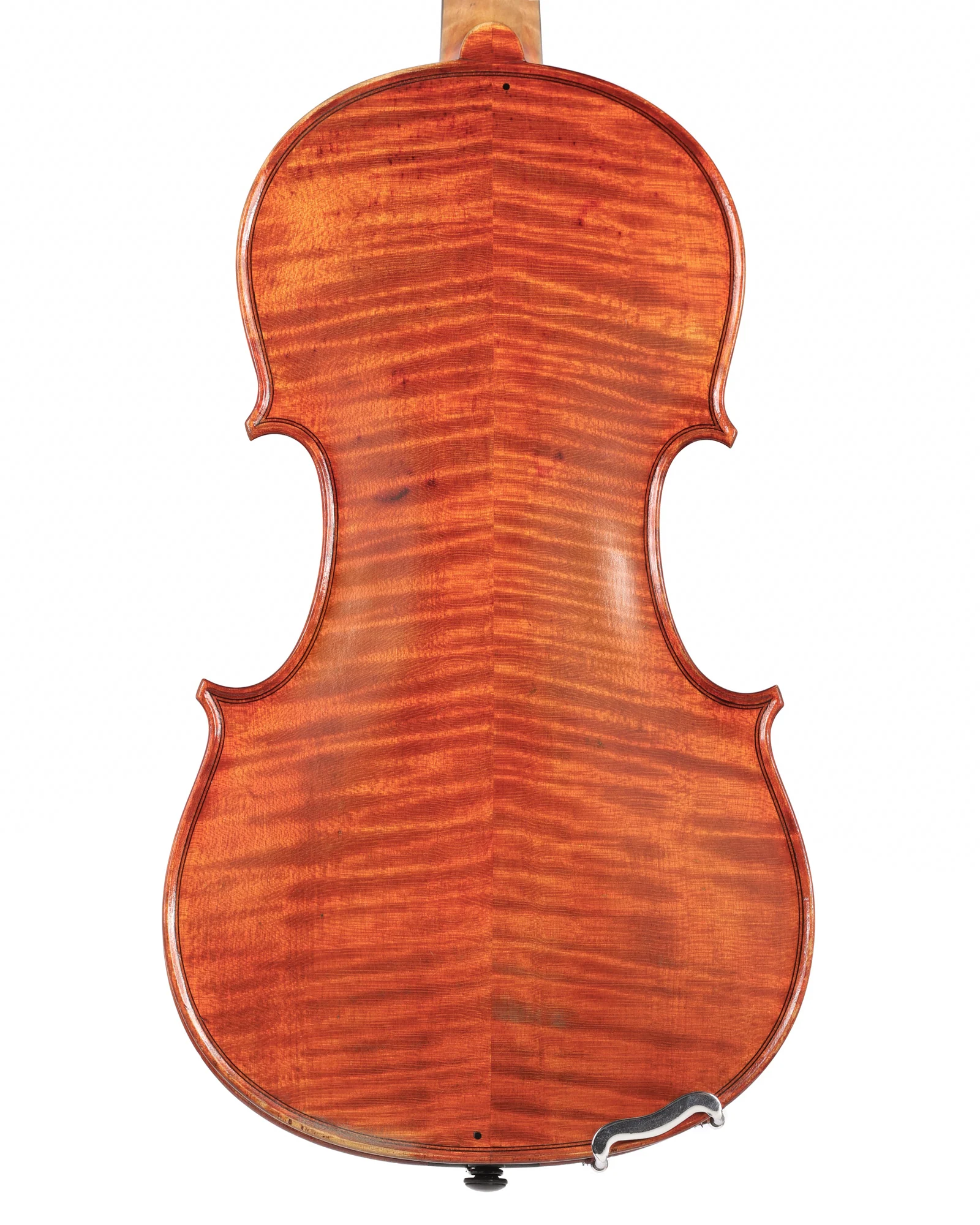
This violin has a gorgeous, projecting deep sound, yet maintains its spirit across registers. It has a rich auburn varnish that brings out the tight spruce grain on the front piece as well as the dramatic tiger stripe maple, its flames extending from the center joint on its two-piece back. The flames similarly run along the ribs, neck, and scroll. “A. LANINI” is stamped near the endpin. The purfling and its bee-sting corners are still bright. This violin is in excellent condition.
Interior label reads: “Alfredo Lanini / San Jose, California / 1934”
Length: 358 mm
Upper Bouts: 165 mm
Middle: 111 mm
Lower Bouts: 206 mm
About the Maker
Alfred Eugene Lanini (1891-1956) was born in Gonzalez, California. As a child, Lanini moved to San Jose and initially worked with a local amateur violinmaker before going to Milan to study with Romeo Antoniazzi. Antoniazzi died less than a year after Lanini’s arrival, but not before Lanini learned Antoniazzi’s clear spirit varnish recipe. The young Lanini then began working in Celeste Farotti’s luthier shop, where he remained for three years. Lanini opened an atelier of his own in San Francisco in 1917, before quickly relocating back to San Jose. His workshop remained in his hometown until Lanini’s death nearly forty years later. In the earlier years of his craft, Lanini often drew from models of Antonio and Omobono Stradivari instruments before turning to Guarneri models after 1930. In his decades-long career, Lanini defined himself as an eminent American violin maker and was remarkably prolific. One hundred instruments over a luthier’s career are enough to be considered productive—Lanini crafted over 500 instruments (the majority of which were violins). Lanini also made nearly 100 bows, having studied bow making under August Nurnberger-Seuss and Auguste Husson. His work was influential in its honoring his Italian training in the style as well as expressing uniquely American characteristics in his instruments.
Product Information
Product Information
Shipping & Returns
Shipping & Returns

Alfred Lanini violin #159, 1934, San Jose, California | Metzler Violins
Alfred Lanini violin #159, 1934, San Jose, California | Metzler Violins
resonant, sweet, supple
About the Instrument
This violin has a gorgeous, projecting deep sound, yet maintains its spirit across registers. It has a rich auburn varnish that brings out the tight spruce grain on the front piece as well as the dramatic tiger stripe maple, its flames extending from the center joint on its two-piece back. The flames similarly run along the ribs, neck, and scroll. “A. LANINI” is stamped near the endpin. The purfling and its bee-sting corners are still bright. This violin is in excellent condition.
Interior label reads: “Alfredo Lanini / San Jose, California / 1934”
Length: 358 mm
Upper Bouts: 165 mm
Middle: 111 mm
Lower Bouts: 206 mm
About the Maker
Alfred Eugene Lanini (1891-1956) was born in Gonzalez, California. As a child, Lanini moved to San Jose and initially worked with a local amateur violinmaker before going to Milan to study with Romeo Antoniazzi. Antoniazzi died less than a year after Lanini’s arrival, but not before Lanini learned Antoniazzi’s clear spirit varnish recipe. The young Lanini then began working in Celeste Farotti’s luthier shop, where he remained for three years. Lanini opened an atelier of his own in San Francisco in 1917, before quickly relocating back to San Jose. His workshop remained in his hometown until Lanini’s death nearly forty years later. In the earlier years of his craft, Lanini often drew from models of Antonio and Omobono Stradivari instruments before turning to Guarneri models after 1930. In his decades-long career, Lanini defined himself as an eminent American violin maker and was remarkably prolific. One hundred instruments over a luthier’s career are enough to be considered productive—Lanini crafted over 500 instruments (the majority of which were violins). Lanini also made nearly 100 bows, having studied bow making under August Nurnberger-Seuss and Auguste Husson. His work was influential in its honoring his Italian training in the style as well as expressing uniquely American characteristics in his instruments.
Original: $24,000.00
-65%$24,000.00
$8,400.00Product Information
Product Information
Shipping & Returns
Shipping & Returns
Description
resonant, sweet, supple
About the Instrument
This violin has a gorgeous, projecting deep sound, yet maintains its spirit across registers. It has a rich auburn varnish that brings out the tight spruce grain on the front piece as well as the dramatic tiger stripe maple, its flames extending from the center joint on its two-piece back. The flames similarly run along the ribs, neck, and scroll. “A. LANINI” is stamped near the endpin. The purfling and its bee-sting corners are still bright. This violin is in excellent condition.
Interior label reads: “Alfredo Lanini / San Jose, California / 1934”
Length: 358 mm
Upper Bouts: 165 mm
Middle: 111 mm
Lower Bouts: 206 mm
About the Maker
Alfred Eugene Lanini (1891-1956) was born in Gonzalez, California. As a child, Lanini moved to San Jose and initially worked with a local amateur violinmaker before going to Milan to study with Romeo Antoniazzi. Antoniazzi died less than a year after Lanini’s arrival, but not before Lanini learned Antoniazzi’s clear spirit varnish recipe. The young Lanini then began working in Celeste Farotti’s luthier shop, where he remained for three years. Lanini opened an atelier of his own in San Francisco in 1917, before quickly relocating back to San Jose. His workshop remained in his hometown until Lanini’s death nearly forty years later. In the earlier years of his craft, Lanini often drew from models of Antonio and Omobono Stradivari instruments before turning to Guarneri models after 1930. In his decades-long career, Lanini defined himself as an eminent American violin maker and was remarkably prolific. One hundred instruments over a luthier’s career are enough to be considered productive—Lanini crafted over 500 instruments (the majority of which were violins). Lanini also made nearly 100 bows, having studied bow making under August Nurnberger-Seuss and Auguste Husson. His work was influential in its honoring his Italian training in the style as well as expressing uniquely American characteristics in his instruments.